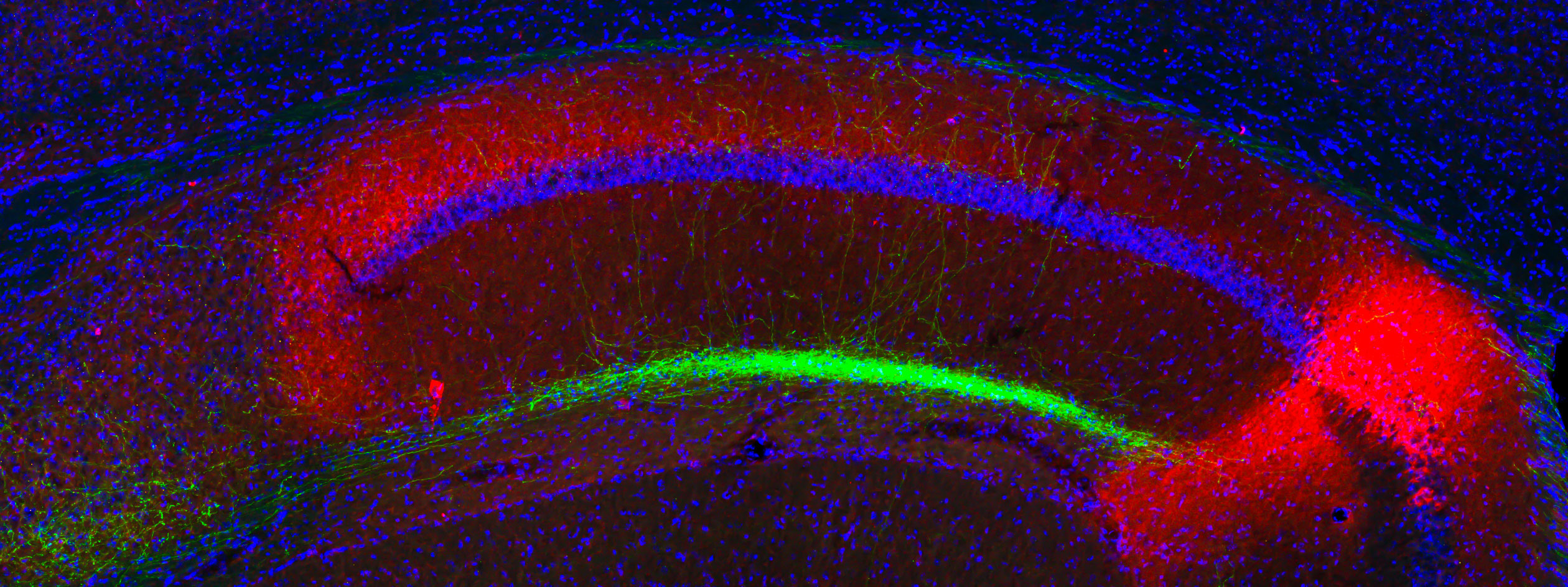
Learning and memory are vital for day-to-day living—from finding our way home to playing tennis to giving a cohesive speech. Some of us have personally witnessed the devastating consequences of memory disorders, whether it's the severe inability to form new memories, as seen in Alzheimer's patients, or difficulty in suppressing a recall of a memory of a highly unpleasant experience, as seen in PTSD patients. The main research interest in my laboratory is to decipher brain mechanisms subserving learning and memory. We seek to understand what happens in the brain when a memory is formed, when a fragile short-term memory is consolidated to a solid long-term memory, and when a memory formed previously is recalled on subsequent occasions. We also seek to understand the role of memory in decision-making, and how various external or internal factors, such as reward, punishment, attention and the subject's emotional state, affect learning and memory. In summary, we study how the central nervous system in the brain enables our mind, with a focus on learning and memory.
e

Current and Future Projects
Currently Ongoing and Near-Future Research Projects
We continue to study the roles of hippocampal circuits in various aspects of hippocampal memory using the multi-facet approaches described in the Research Interests section. In addition, our research interest extends into several other brain areas that communicate with the hippocampus through specific circuits and neuromodulators. These extended studies will allow us to investigate not only the basic functions of hippocampal circuits in learning and memory, but their modulations by reward, penalty, attention and emotion, as well as the role of learning and memory in decision-making, and vice-versa.
Our research projects include studying the:
- Role of the direct EC→CA1 pathway in hippocampal learning and memory, and memory consolidation.
- Role of mossy fiber input from dentate gyrus granule cells in pattern completion and separation.
- Interaction of the trisynaptic and monosynaptic pathways, as well as subcortical pathways in novelty detection and novelty-triggered learning.
- Localization, visualization and modulation of memory engrams through the combined use of transgenic and optogenetic methods, such as channelrhodopsin and halorhodopsin.
- Mechanism for memory reconsolidation and extinction at the memory engram level.
- Role of protein-synthesis dependent LTP in memory consolidation.
- Roles of “preplay” in learning and “replay” in memory consolidation.
- Role of specific neural circuits involving neuromodulators (dopamine, serotonin and norepinephrine) in learning and memory, decision-making and control of behaviors.
- Role of PAK1 biochemical pathway in fragile X mental retardation.